FemiCore Review: A Label and Evidence Analysis
Short answer: A more literate label than most of its category, undercut by proprietary blends too small to hold the studied doses. Rated 3 out of 5: a fair 60-day experiment for recurring urinary complaints, not a clinically dosed product.
Disclosure: This page contains affiliate links. We may earn a commission at no additional cost to you.
Reviewed by The Editorial Team
Published August 17, 2026 · Updated September 12, 2026
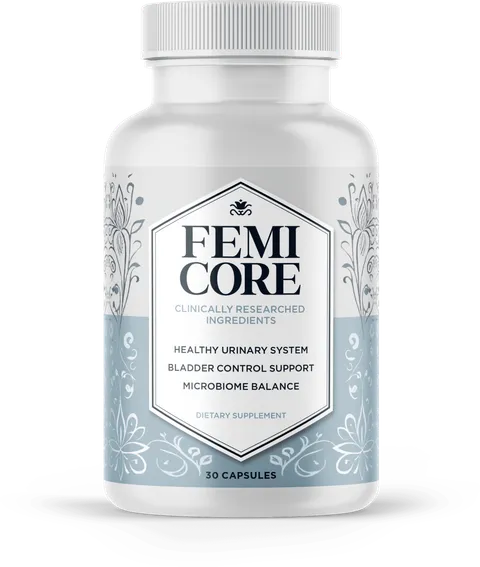
FemiCore (Bladder & Urinary Tract Support, 30 Capsules) by FemiCore — rated 3 out of 5.
Price 49.00 USD
Dosage 1 capsule daily with 6-8 oz of water, or as directed by a healthcare professional.
Ingredients: Herbal Blend 350 mg: Mimosa pudica seed extract, Cranberry extract (Vaccinium macrocarpon, std. to 30% proanthocyanidin), Bearberry leaf (Arctostaphylos uva-ursi), Berberine hydrochloride extract 8%, Probiotic Blend 50 mg: Lactobacillus crispatus LCr86, Lactobacillus acidophilus LA88, Lactobacillus plantarum N13, Lactobacillus gasseri LG08, Lactobacillus casei LC16
Verdict
A more literate formula than most of its category — real strain codes, a meaningful PAC standardization, lawful labeling — wrapped in the category's central problem: proprietary blends too small to contain the doses the supporting evidence used. If the 60-day guarantee makes it a low-risk experiment for you and recurring urinary complaints are your problem, buy it knowing exactly that; if you want the studied doses, a single-ingredient cranberry product at 500 mg with disclosed PACs gets you closer for less money.
Pros
- Ingredient selection tracks the recurrent-UTI literature — cranberry standardized to 30% proanthocyanidins and Lactobacillus species chosen from the strains research actually discusses
- Probiotic strains are disclosed at strain level (LCr86, LA88, N13, LG08, LC16) — most bladder blends stop at species names
- Label claims stay inside lawful structure/function language, with the FDA disclaimer printed on the bottle
- One capsule daily with a 60-day money-back guarantee on all official-site packages
Cons
- A 350 mg herbal blend split across four ingredients cannot reach the doses the evidence is built on — the FDA's cranberry qualified claim starts at 500 mg/day of fruit powder alone
- Probiotic content is disclosed in milligrams (50 mg), not CFUs, so it cannot be compared to any published trial dose
- No third-party certification (NSF, USP, Informed Choice) — purity and label accuracy rest on the manufacturer's own GMP claim
- Uva-ursi is a short-term-use herb in the European monographs, an odd fit for a daily maintenance formula
- At 49 to 79 USD per 30-day bottle, it is priced like a clinically dosed product without the disclosed doses to match
How we analyzed this product
We compared FemiCore's label — every ingredient, both blend weights, and the disclosed probiotic strain codes — against the published literature for each ingredient, checked the label's claims against what dietary supplements may lawfully say, and calculated monthly cost across the offer tiers on the official sales page. We did not evaluate taste, tolerability, or any property that requires consuming the product.
We did not use this product hands-on. This review is a formulation and evidence analysis.
FemiCore is a once-daily capsule sold for women’s bladder and urinary tract health: a 350 mg herbal blend (mimosa pudica seed, cranberry extract standardized to 30% proanthocyanidins, bearberry leaf, berberine HCl) plus a 50 mg five-strain Lactobacillus blend. It is sold through its official sales page in 2-, 3- and 6-bottle packages with a 60-day money-back guarantee. We analyzed the label against the published evidence — the full ingredient-by-ingredient literature is in our bladder supplement evidence check; this review applies it to one product.
What the label gets right
More than most of this category, and that deserves saying plainly.
The strain codes are real disclosure. FemiCore lists its probiotics at strain level — L. crispatus LCr86, L. acidophilus LA88, L. plantarum N13, L. gasseri LG08, L. casei LC16. The species selection tracks the strains the urinary microbiome literature actually discusses, including L. crispatus, the species behind the strongest probiotic trial in recurrent UTI. Most competing labels stop at species names, which cannot be mapped to any study.
The cranberry standardization is meaningful. “Standardized to 30% proanthocyanidins” is a real, checkable specification — typical cranberry extracts run far lower. Whatever share of the blend the cranberry occupies, it is a concentrated form.
The claims are lawful. The bottle says “healthy urinary system,” “bladder control support,” “microbiome balance” — structure/function language with the required FDA disclaimer printed beside it. In a category this aggressive, a label that stays inside the law is worth a point of credit.
Where the label cannot answer
The blend arithmetic. The entire herbal blend is 350 mg across four ingredients. The FDA’s qualified health claim for cranberry applies from 500 mg per day of cranberry fruit powder — more than this whole blend. The 2023 Cochrane review’s moderate-certainty finding of reduced recurrent-infection risk in women is built on doses this label cannot contain, whatever the split. The 30% PAC standardization narrows the gap — a high-PAC extract needs less mass than fruit powder — but without the cranberry milligrams disclosed, “narrows” is as far as honesty allows.
Probiotics in milligrams, not CFUs. The 50 mg probiotic blend does not state colony-forming units. Published probiotic research doses in billions of CFUs; a milligram figure cannot be converted or compared. The one strong L. crispatus trial also used a vaginal suppository, not an oral capsule — oral delivery to the urinary tract is a plausibility argument, not a demonstrated one.
No third party on the label. GMP and “FDA-registered facility” are manufacturing baselines, not product verification. There is no NSF, USP, or Informed Choice mark, so identity and purity rest on the brand’s own word. For comparison, that seal is precisely what we credited in our Thorne Creatine analysis.
Uva-ursi in a daily formula. European herbal monographs position bearberry as a short-course herb for acute lower-urinary complaints, capped around a week. Its presence in a take-every-day maintenance capsule is formulation by theme, not by literature.
Price: what a month actually costs
The official page prices FemiCore by package: $49 per bottle on the 6-bottle package ($294 total, free shipping), $69 per bottle on the 3-bottle package ($207 total, free shipping), and $79 per bottle on the 2-bottle package ($158 total, plus $9.99 shipping). Each bottle is 30 capsules — one month. Current packages and the guarantee are summarized on our FemiCore page. FemiCore is therefore a 49-to-79-dollar monthly product — clinically-dosed-product pricing, without the disclosed doses to justify it. The 60-day money-back guarantee is real risk reduction on a first order, and it is the honest counterweight: the label will not tell you the doses, but the guarantee lets you run your own eight-week test with an exit.
Is FemiCore legit?
Two different questions hide inside this one, and they have different answers.
Is it a real product from a real seller, with a guarantee that works? Yes. FemiCore is sold through a major online retail platform whose 60-day money-back guarantee is enforced at the platform level, not at the brand’s discretion — the refund exists whether or not the brand wants it to. The label stays inside lawful supplement language with the FDA disclaimer printed on the bottle, and the strain-level probiotic disclosure is more transparency than most of this category offers. Nothing about the selling setup pattern-matches a scam.
Is it a proven product? That is the question this whole review answers, and the answer is more guarded: no third-party verification mark, and proprietary blends too small to contain the doses the supporting evidence used. “Legit” in the sense of safe to transact with — yes. “Legit” in the sense of demonstrated to do what the marketing implies — the label does not disclose enough to say, which is why our rating is 3 and not higher.
What is behind “FemiCore complaints” searches
We analyze labels and evidence, not user reports, so we will not manufacture a complaints list — but we can tell you what is worth knowing before you rely on one.
Much of what ranks for this search is not buyer feedback. When we checked the results for FemiCore review queries, the top pages were recycled promotional content on free-hosting sites and forum spam — affiliate material dressed as reviews, both positive and negative. Weigh the label math over testimonials in either direction.
The complaint patterns worth heading off are predictable for this category. Expectation mismatch is the big one: the supporting evidence for cranberry is about reduced recurrence over months of consistent use, not a sensation you feel in the first week — anyone buying for a fast, felt effect is set up to be disappointed by any product in this aisle. The practical protections are simple: buy through the official page (the platform guarantee applies to those orders), keep the order confirmation email, and calendar the 60-day window so a refund decision happens inside it, not after.
Who this is plausibly for — and who it is not for
If recurring urinary complaints and irritation are your pattern, the ingredient logic here at least points at the right literature, and the guarantee makes the experiment cheap to unwind. If your problem is leaks under pressure — sneezing, lifting, laughing — no capsule addresses the muscle mechanics involved; that is pelvic floor territory, and we wrote the evidence-first guide on it. Anyone pregnant, on prescription medication (berberine interacts with several), or with kidney conditions should talk to a clinician before this or any bladder supplement — uva-ursi in particular is contraindicated in those groups. Our ingredient-by-ingredient safety check goes through every caution and interaction.
How we arrived at 3 out of 5
- Formulation logic (credit): ingredient selection and strain-level disclosure track the right literature — this is not a random herb pile.
- Dose verifiability (the main deduction): the blend sizes make the evidence-anchored doses arithmetically impossible to confirm and mostly impossible to contain.
- Third-party verification (deduction): none.
- Label lawfulness (credit): structure/function claims with the disclaimer, correctly done.
- Price (deduction, softened by the guarantee): premium pricing on undisclosed doses; the 60-day refund window offsets first-order risk.
Three out of five: a formula that reads the right papers but will not show its math, at a price that assumes it did.
Sources
- the strongest probiotic trial in recurrent UTIpubmed.ncbi.nlm.nih.gov
- qualified health claim for cranberrynatlawreview.com
- 2023 Cochrane review’scochranelibrary.com